
Never Lose Your Belongings Again
Losing your valuables is stressful. This list of the best offline location trackers for 2025 will help you find the right device to keep track of your belongings, whether it’s your keys, luggage, or anything else important. Discover how these trackers, including Apple AirTag, Tile Mate, Samsung Galaxy SmartTag, Chipolo ONE, Garmin inReach Mini 2, Jiobit, and TrackR Pixel, offer peace of mind by working even without constant internet access. Find the perfect offline location tracker to suit your needs and budget.
1. Apple AirTag
The Apple AirTag stands out as a premier offline location tracker, seamlessly integrating with the vast Apple ecosystem to provide a near-ubiquitous solution for finding lost belongings. This small, disc-shaped device leverages Bluetooth and Ultra-Wideband (UWB) technology to pinpoint the location of attached items, making it a valuable tool for frequent travelers, tech-savvy individuals, and anyone prone to misplacing their keys, bags, or other valuables. Its tight integration with the Find My network, which comprises hundreds of millions of Apple devices worldwide, allows for surprisingly accurate tracking even when your item is far from your own iPhone or iPad. This makes the AirTag a particularly powerful offline location tracker, as it doesn’t rely solely on your own device’s connection to function.
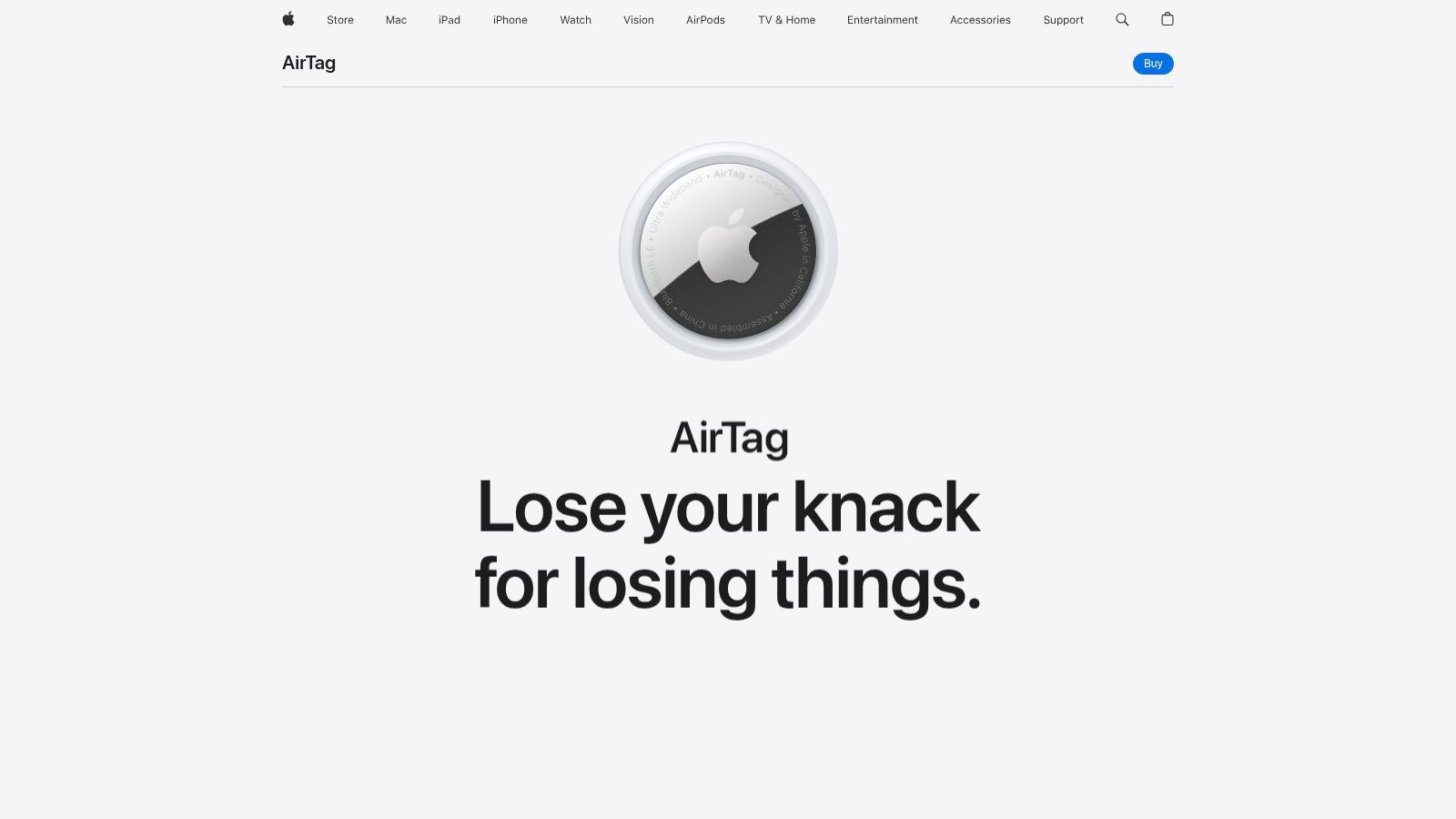
At its core, the AirTag utilizes Bluetooth to communicate with nearby Apple devices. When an AirTag is out of range of its owner’s device, it can still ping its location to the Find My network via any Apple device it encounters. This crowdsourced tracking system allows you to track your belongings across vast distances, even internationally. Furthermore, the integration of UWB technology provides incredibly precise location tracking when you’re close to your lost item. This “Precision Finding” feature, available on iPhones equipped with the U1 chip, guides you with directional arrows and distance estimations, making it incredibly easy to locate your item within a room or a crowded area.
The AirTag boasts a user-friendly setup process. Simply bring the AirTag close to your iPhone, and it will automatically connect, much like AirPods. You can then assign the AirTag to a specific item, like “Keys” or “Backpack,” and personalize it with an emoji. The Find My app provides a clear interface for viewing the last known location of your AirTags, playing a sound on them to help you locate them within earshot, or activating Lost Mode to receive notifications when the AirTag is detected by another Apple device.
Beyond its core functionality, the AirTag prioritizes user privacy. Location data is end-to-end encrypted, meaning that only you can see the location of your AirTags. Apple has also implemented anti-stalking features to prevent unwanted tracking. These features include alerts if an unknown AirTag is traveling with you and the ability to make an unknown AirTag play a sound to reveal its presence. While these features are crucial for safety, they can potentially limit some legitimate use cases, such as tracking shared items or lending belongings to others. You can learn more about the implications of location tracking on privacy by reading this article: Learn more about Apple AirTag.
The AirTag is IP67 water and dust resistant, capable of withstanding splashes, spills, and even brief submersion. It is powered by a user-replaceable CR2032 battery, which typically lasts for over a year. While the AirTag itself lacks a built-in keychain hole, a wide variety of third-party accessories are available, allowing you to attach it to almost anything.
One of the main drawbacks of the AirTag is its dependence on the Apple ecosystem. It is incompatible with Android devices. Another consideration is the cost; at approximately $29 per tag (or $99 for a pack of four), it can be a relatively expensive offline location tracker compared to some Bluetooth trackers on the market. However, the tight integration with the Find My network, precision tracking capabilities, and strong privacy features justify the premium price for many users, particularly those heavily invested in the Apple ecosystem. For privacy-conscious iOS users, frequent travelers, or even memory journaling enthusiasts who want to keep track of important items, the Apple AirTag offers a compelling solution for peace of mind.
2. Tile Mate
The Tile Mate is a popular and affordable offline location tracker that leverages Bluetooth technology and a vast community network to help you find your misplaced belongings. It’s a practical solution for anyone prone to losing keys, wallets, or bags, and its cross-platform compatibility makes it accessible to both iOS and Android users. While it may not boast the advanced precision of ultra-wideband (UWB) trackers like Apple’s AirTag, the Tile Mate’s affordability and extensive community network make it a strong contender in the offline location tracking space. This makes it an excellent choice for frequent travelers and those concerned about leaving valuable items behind.
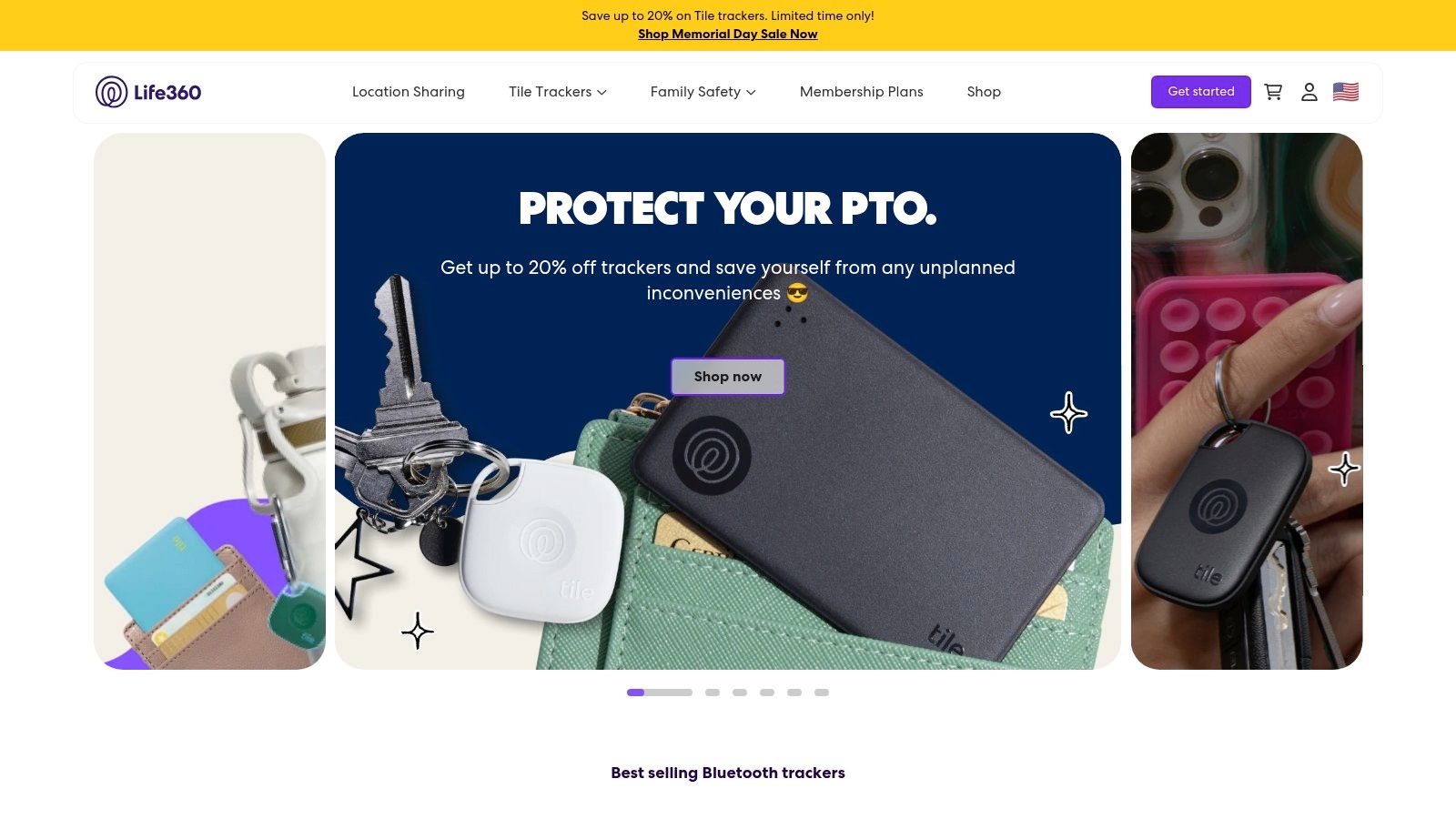
The Tile Mate operates primarily using Bluetooth, offering a connection range of up to 250 feet. This means you can easily locate items within your home, office, or car. However, what truly sets the Tile Mate apart is its community-based finding network. If your tagged item goes out of Bluetooth range, the Tile network comes into play. Any Tile user who comes within range of your lost item will anonymously relay its location back to you, effectively expanding the search area significantly. This makes it particularly useful for travelers who may misplace items in unfamiliar locations. For privacy-conscious users, this anonymous location sharing offers a level of reassurance, as no personal data is exchanged.
For travel bloggers and social media enthusiasts who often carry expensive camera equipment, the Tile Mate can offer peace of mind. Attaching a Tile Mate to a camera bag allows for quick retrieval if it’s misplaced during a shoot or while exploring a new city. Memory journaling and life-logging enthusiasts can also benefit from the Tile Mate. Attaching it to journals or other memory-keeping devices ensures these precious items are never permanently lost.
Setting up the Tile Mate is straightforward. Simply download the Tile app on your iOS or Android device, create an account, and follow the in-app instructions to pair your Tile Mate. The app allows you to customize the ring tone and name your trackers for easy identification. You can even use the app to make your phone ring, even if it’s on silent, as long as it’s within Bluetooth range of the Tile Mate.
The Tile Mate offers several practical advantages. Its compact size and built-in keychain hole make it easy to attach to keys, bags, or even slip into a wallet. The water-resistant design (IP55 rating) provides protection against splashes and rain, making it suitable for outdoor use. Furthermore, the Tile Mate boasts an impressive 3-year battery life, reducing the hassle of frequent replacements.
Pricing for the Tile Mate starts around $20, making it a significantly more affordable offline location tracker compared to some alternatives. However, it’s important to note that while core tracking features are available without a subscription, premium features like smart alerts and location history require a paid subscription.
While the Tile Mate is a robust and versatile offline location tracker, it does have some limitations. The Tile network, while extensive, is smaller than Apple’s Find My network, which leverages the sheer number of Apple devices globally. Another drawback is the non-replaceable battery. After three years, you’ll need to purchase a new Tile Mate. Lastly, the reliance on Bluetooth means the Tile Mate lacks the precision of UWB trackers, which can pinpoint locations with much greater accuracy.
In comparison to Apple’s AirTag, which utilizes UWB technology for highly precise tracking, the Tile Mate’s Bluetooth-based tracking offers less precision. However, the Tile Mate’s cross-platform compatibility is a significant advantage for those who use both Android and iOS devices. Furthermore, the Tile Mate’s price point makes it a more budget-friendly option for users looking for a simple and effective offline location tracker.
For users seeking an affordable, cross-platform compatible, and easy-to-use offline location tracker, the Tile Mate is a compelling choice. While it may not offer the pinpoint accuracy of UWB technology, its expansive community network, long battery life, and accessible price point make it a valuable tool for keeping track of your belongings. Visit the Tile website for more information and to explore the various Tile Mate options available.
3. Samsung Galaxy SmartTag
For those entrenched in the Samsung Galaxy ecosystem, the Samsung Galaxy SmartTag presents a compelling solution for offline location tracking. This small, lightweight tracker leverages Bluetooth technology and integrates seamlessly with Samsung’s SmartThings Find network, offering a convenient way to keep tabs on your belongings even without an internet connection. While primarily designed for locating lost keys, bags, or other personal items, its functionality extends beyond simple tracking, offering smart home integration and even augmented reality (AR) finding capabilities. This makes it a strong contender in the offline location tracker market, particularly for Samsung users.
The SmartTag comes in two versions: the standard SmartTag, utilizing Bluetooth Low Energy (BLE), and the SmartTag+, which incorporates Ultra-Wideband (UWB) technology for more precise location tracking. Both versions rely on the SmartThings Find network, which leverages the sheer number of Galaxy devices globally to help pinpoint your lost item. If your tagged item is out of your Bluetooth range, another Galaxy device within proximity can anonymously detect its signal and relay its location back to you, all while maintaining your privacy. This crowdsourced network expands the SmartTag’s reach significantly, making it a powerful offline location tracker.
The standard SmartTag, priced competitively around $30, provides a cost-effective entry point into the world of Bluetooth trackers. It’s ideal for everyday items like keys, wallets, or backpacks. The CR2032 battery is replaceable, eliminating the need to purchase a whole new tracker when the battery runs out, a significant advantage over some competitors. The SmartTag+ offering UWB technology, although more expensive, offers enhanced precision, allowing you to pinpoint the exact location of your item within a room, a useful feature for finding misplaced items within a cluttered space. This precision is particularly beneficial for frequent travelers who might misplace items in unfamiliar hotel rooms or crowded airports.
Setting up a SmartTag is a breeze. Simply download the SmartThings app on your compatible Samsung Galaxy device, power on the SmartTag, and follow the on-screen instructions to pair it. The app guides you through the process of attaching the tag to your belongings and labeling them appropriately. Once set up, you can view the last known location of your tagged items on a map within the SmartThings app. If you’re within Bluetooth range, you can also trigger the SmartTag’s built-in ringer to help you locate it.
The SmartTag shines when integrated with Samsung’s broader SmartThings ecosystem. You can use it to trigger smart home automations, such as turning on lights when you arrive home with your tagged keys. This feature adds a layer of convenience and personalization, further solidifying the SmartTag’s place in the Samsung ecosystem. Imagine arriving home late at night, and as you approach your door with your tagged keys, your porch lights automatically illuminate. This seamless integration is a key selling point for Samsung users seeking a cohesive smart home experience.
While the SmartTag offers compelling features, it’s essential to be aware of its limitations. The most significant drawback is its exclusivity to the Samsung Galaxy ecosystem. iOS users and those with other Android devices are locked out. While the SmartThings Find network is vast, it’s still smaller than established networks like Apple’s Find My network or Tile’s network. This can impact the effectiveness of crowdsourced tracking, especially in areas with fewer Galaxy device users. Furthermore, third-party app support is limited, confining its functionality primarily within the Samsung ecosystem.
Compared to other offline location trackers, the SmartTag offers a competitive balance of features and price, particularly within the Samsung ecosystem. Tile trackers, for example, offer a broader network and cross-platform compatibility, but lack the deep integration with smart home systems that the SmartTag provides. Apple’s AirTag, while boasting a massive network and precise UWB tracking, is exclusively for Apple users. Therefore, for globetrotting Samsung Galaxy users who desire a convenient offline location tracker with smart home integration capabilities, the SmartTag is an excellent choice. Its affordable pricing, replaceable battery, and seamless integration with the Galaxy ecosystem make it a valuable tool for keeping track of your belongings. You can explore the SmartTag and its features further on the official Samsung website: https://www.samsung.com/us/mobile/mobile-accessories/phones/galaxy-smarttag-black-ei-t5300bbegus/
4. Chipolo ONE
Are you tired of losing your keys, backpack, or luggage? In a world increasingly reliant on constant connectivity, sometimes the simplest solutions are the most effective. The Chipolo ONE stands out as a reliable and affordable offline location tracker, offering peace of mind without the complexities of GPS-based alternatives. It leverages Bluetooth technology and a crowd-sourced network to help you keep tabs on your belongings, making it a practical choice for various users, from frequent travelers to those simply prone to misplacing everyday items. This offline location tracker distinguishes itself through its impressive volume, colorful design, and compatibility with both major mobile ecosystems, making it a versatile tool in today’s connected, yet sometimes offline, world.

The Chipolo ONE is particularly attractive for its straightforward functionality. Unlike GPS trackers that require a cellular connection and often come with subscription fees, the Chipolo ONE operates via Bluetooth. This means it connects directly to your smartphone, and while this limits its range to approximately 200 feet, it eliminates the need for ongoing costs and ensures functionality even when you’re off the grid. This offline capability makes it an excellent tool for travelers venturing into areas with limited or no cellular service. Imagine being able to locate your backpack in a bustling market or finding your lost luggage at a busy airport, all without needing an internet connection. This offline location tracker provides a reliable safety net in situations where other tracking methods might fail.
This offline location tracker boasts a remarkably loud 120dB ring, one of the loudest in the Bluetooth tracker market. This feature is invaluable when searching for misplaced items within your home or office. No more silently creeping around, straining to hear a faint beep; the Chipolo ONE’s powerful ring can be heard even through couches, cushions, and cluttered drawers. It also features an IPX5 water-resistant rating, providing protection against splashes and rain, adding to its durability and versatility.
While the Chipolo ONE shines in its simplicity and affordability (priced around $25), it’s essential to be aware of its limitations. Its reliance on a smaller crowd-finding network compared to giants like Tile means that its effectiveness in locating lost items outside your Bluetooth range might be somewhat limited. Furthermore, the Chipolo ONE lacks precision finding capabilities found in more advanced trackers like Apple’s AirTag. This means it can tell you the general vicinity of your item but won’t guide you to its exact location within a room. The battery life, while offering up to two years of use, is replaceable, unlike some competitors with rechargeable batteries. This means having to purchase replacement batteries, albeit infrequently. The Chipolo ONE also offers limited smart features compared to some competitors; its primary focus is on location tracking.
Setting up the Chipolo ONE is a breeze. Download the Chipolo app (available for both iOS and Android), create an account, and follow the simple on-screen instructions to pair the tracker with your device. The app allows you to customize the ring tone, mark items as lost, and even view the last known location on a map. The Chipolo ONE integrates with the Find My network for Apple devices and Google Find My Device network for Android devices (through different variants), offering a broader reach for locating lost items. This integration leverages the vast network of Apple and Android devices to help pinpoint your Chipolo ONE, even if it’s far beyond your phone’s Bluetooth range. This feature, while dependent on other users being in proximity to your lost item, adds another layer of security and increases the chances of recovery.
For those concerned about privacy, the Chipolo ONE’s reliance on Bluetooth and its own network, as opposed to GPS tracking, offers a degree of anonymity. Your location data is not constantly being transmitted to a central server, and the crowd-finding network operates anonymously, ensuring that your privacy is protected.
The Chipolo ONE emerges as a compelling offline location tracker for those seeking a simple, affordable, and effective solution. Its loud ring, colorful design, compatibility with both major mobile ecosystems, and offline functionality make it a practical tool for various use cases. While it lacks some advanced features found in more expensive trackers, its core functionality and ease of use make it an excellent choice for keeping track of your belongings, whether you’re traversing the globe or simply navigating your daily routine. You can find more information and purchase the Chipolo ONE directly from their website: https://chipolo.net/.
5. Garmin inReach Mini 2
When venturing off the grid, relying solely on cell towers for location tracking and communication can be a recipe for disaster. For true peace of mind and dependable connectivity in the most remote corners of the world, the Garmin inReach Mini 2 stands out as a premier offline location tracker. This compact satellite communicator leverages the Iridium satellite network, a global constellation ensuring coverage even where cellular and Wi-Fi signals cease to exist. This makes it an invaluable tool for adventurers, explorers, and anyone prioritizing safety and communication in challenging environments. The device’s ability to function as a true offline location tracker fills a critical gap for those seeking reliable tracking capabilities beyond the limitations of traditional methods.
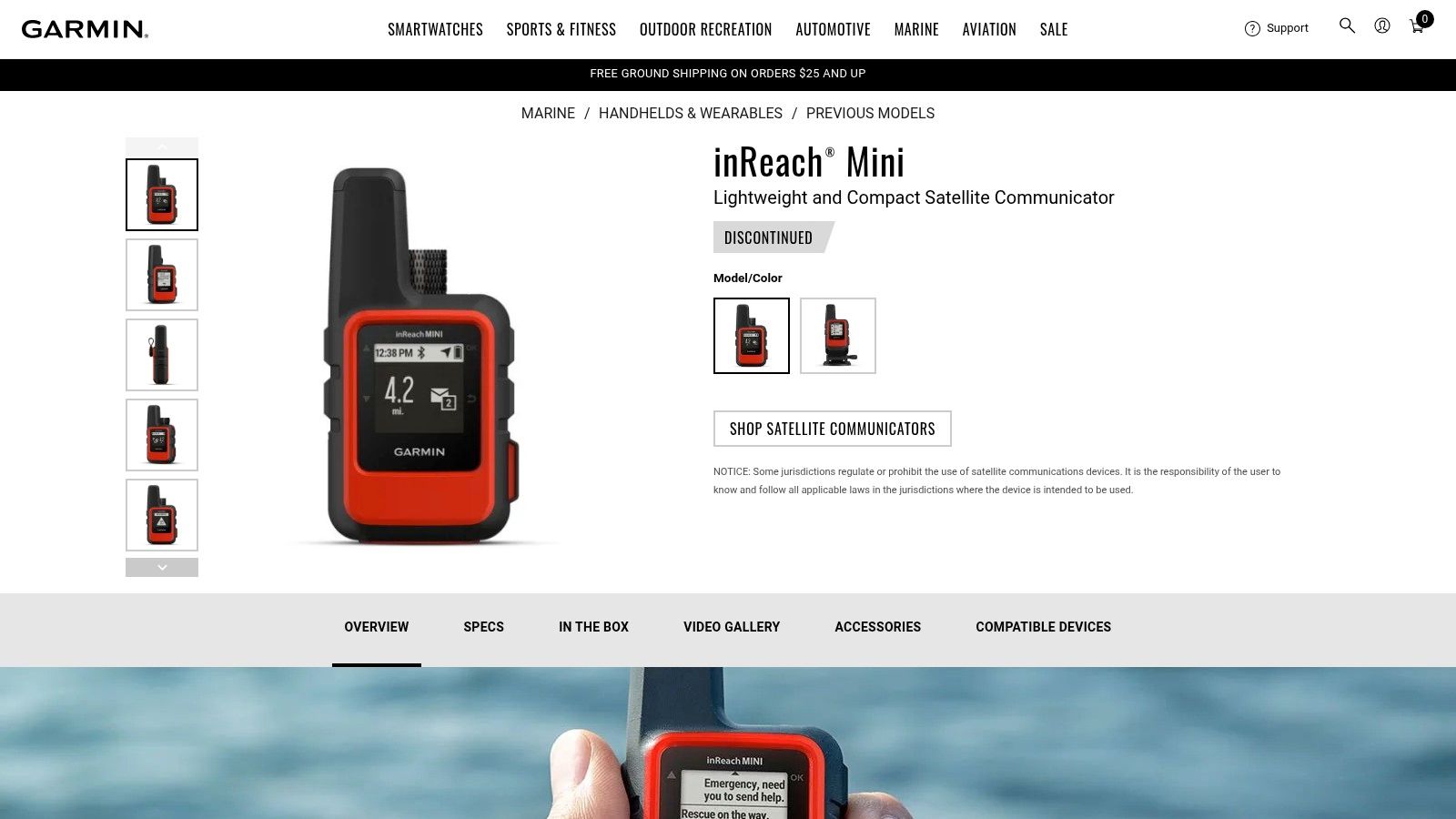
The Garmin inReach Mini 2 is far more than a simple GPS tracker; it’s a lifeline. Its two-way messaging capability allows you to stay in contact with loved ones or colleagues, sharing updates and receiving messages even when completely disconnected from the digital world. Imagine trekking through the Himalayas or kayaking across a vast ocean, knowing you can still communicate with the outside world. This functionality is crucial for solo travelers and adventurers, providing an extra layer of security and enabling them to share their experiences while staying connected to support networks. You can even post updates directly to social media through the Garmin Earthmate app when you have Wi-Fi or cellular connection, keeping your followers in the loop on your latest adventures. Perhaps you’re meticulously documenting your travels in a journal app. Learn more about Garmin inReach Mini 2 and how it can integrate with your digital record-keeping.
Beyond messaging, the inReach Mini 2 offers a critical SOS function. In a life-threatening emergency, activating the SOS button triggers an interactive SOS message to the GEOS 24/7 emergency response coordination center. They will then notify the appropriate emergency responders based on your location and provide updates to your designated emergency contacts. This feature transforms the device from a simple offline location tracker into a potential lifesaver. The knowledge that help is just a button press away brings immeasurable peace of mind, particularly in remote and unpredictable environments.
The inReach Mini 2 boasts impressive battery life, offering up to 100 hours in tracking mode with a 10-minute interval. This extended battery performance ensures the device remains operational even on multi-day expeditions without requiring frequent charging. The durable and waterproof design further enhances its suitability for challenging conditions, protecting it from the elements and accidental drops.
While the Garmin inReach Mini 2 provides invaluable functionality as an offline location tracker, it’s essential to acknowledge its drawbacks. The device itself carries a premium price tag of around $400, and users must also subscribe to a satellite communication plan, adding to the overall cost. These plans vary in price depending on the level of usage and features required. The device is also noticeably larger and heavier than Bluetooth trackers, making it less discreet for everyday carry. Furthermore, using the satellite communication features necessitates a clear view of the sky, which can be challenging in dense forests or canyons. Setting up the device and managing the subscription can also be slightly more complex compared to simpler Bluetooth trackers.
Despite these drawbacks, the benefits of the Garmin inReach Mini 2, especially its ability to function as a reliable offline location tracker in truly remote areas, outweigh the costs for many users. The peace of mind it offers, combined with its life-saving SOS functionality and robust tracking capabilities, makes it an essential investment for serious adventurers, explorers, and anyone prioritizing safety and communication in offline environments.
6. Jiobit
Jiobit stands out as a robust offline location tracker, primarily designed for keeping tabs on loved ones, whether they’re children exploring the neighborhood, pets venturing on their own adventures, or elderly family members needing an extra layer of security. Unlike many other trackers that rely solely on Bluetooth, Jiobit leverages a sophisticated combination of cellular, Wi-Fi, Bluetooth, and GPS technologies. This multi-network approach enables real-time location tracking with impressive accuracy, even in areas with limited or no cellular coverage. Its reliance on cellular data makes it particularly appealing for those seeking an offline location tracker that doesn’t depend on the proximity of a smartphone or other connected device. This independence makes it a powerful tool for peace of mind, especially for frequent travelers and globetrotters who might be venturing into areas with unreliable internet connectivity.
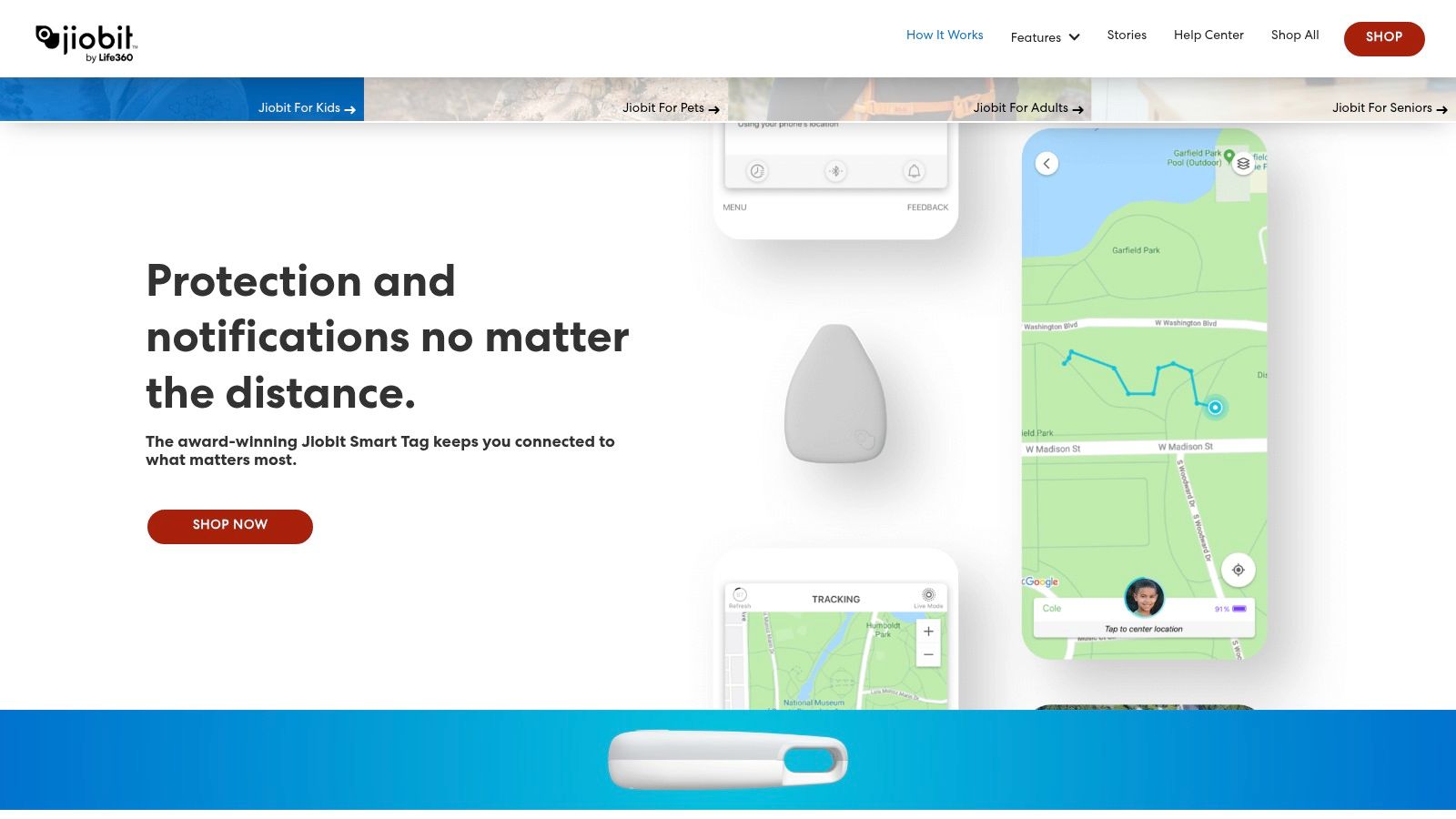
The key differentiator for Jiobit in the realm of offline location trackers is its hybrid approach to connectivity. While Bluetooth trackers offer a cost-effective solution for short-range tracking, they become useless once the connection is lost. Jiobit sidesteps this limitation by using cellular data as its primary connection method. This allows for continuous tracking over much wider distances, providing a significant advantage, particularly for tracking individuals who might move beyond Bluetooth range. The integration of Wi-Fi and GPS further enhances accuracy, providing pinpoint location information within the comprehensive mobile app. If you’re considering documenting your journeys, you might find our article on travel journaling helpful. Learn more about Jiobit It explores various methods of capturing memories, which can be complemented by location data from a tracker like Jiobit.
Jiobit also offers a robust geofencing feature, a critical component for any effective offline location tracker. Geofencing allows users to set virtual boundaries on a map, triggering instant alerts if the tracker enters or exits the designated area. This functionality is incredibly useful for parents wanting to know when their child arrives home from school, or for caregivers monitoring the movements of an elderly family member prone to wandering. For pet owners, it provides an extra layer of security, alerting them if their furry friend escapes the yard. This proactive notification system is invaluable for quick response times in potentially critical situations.
Privacy is paramount, especially when dealing with location data. Jiobit addresses this concern by employing strong encryption to protect location information. This ensures that the tracked individual’s location remains private and secure. The Jiobit app provides a user-friendly interface for managing settings, viewing real-time location updates, and configuring geofence parameters. The long battery life, up to 20 days on a single charge, minimizes the need for frequent charging, a significant advantage for uninterrupted tracking.
While the benefits of Jiobit are numerous, it’s important to consider the associated costs. Jiobit requires a monthly subscription, ranging from $9 to $20 depending on the chosen plan. This recurring cost makes it more expensive than simpler Bluetooth trackers, but the added features and cellular connectivity justify the price for those needing a more comprehensive solution. Also, its larger size compared to some Bluetooth trackers might make it less suitable for attaching to very small items. Finally, like all cellular-based devices, Jiobit’s functionality is dependent on cellular coverage.
Setting up Jiobit is straightforward, involving creating an account, activating the device, and downloading the mobile app. The app guides users through the pairing process and provides clear instructions for configuring geofences and other features. While the device is larger than some Bluetooth trackers, its durable design makes it well-suited for the rigors of everyday use. The extended battery life minimizes downtime and ensures continuous tracking, a critical feature for an effective offline location tracker. For privacy-conscious users, the robust encryption and secure data handling provide reassurance that location information is protected. Jiobit’s combination of features, robust performance, and focus on security makes it a compelling choice for those seeking a reliable and comprehensive offline location tracking solution.
7. TrackR Pixel
The TrackR Pixel earns its spot on this list of offline location trackers due to its compact design, affordability, and helpful features like LED lights and separation alerts. While it might not boast the range or the largest community network of some newer trackers, its sub-$25 price point makes it an attractive option for those looking for a basic, yet effective, way to keep tabs on their belongings. It’s a particularly good choice for those concerned about misplacing items within a smaller area, such as a home, office, or even a festival campsite.
Imagine you’re a frequent traveler navigating a bustling airport. Your passport, tucked away in your carry-on, is your most valuable possession. With the TrackR Pixel attached, you can have peace of mind knowing that if your bag gets misplaced, you can use your phone to trigger the Pixel’s loud ring, helping you locate it quickly amidst the chaos. Or perhaps you’re a social media enthusiast constantly juggling cameras, lenses, and other gear. The TrackR Pixel can be easily attached to these valuable items, ensuring they don’t get lost in the shuffle during a shoot. For privacy-conscious iOS users, the limited range of Bluetooth might actually be seen as a benefit, ensuring your location data isn’t broadcast unnecessarily over long distances.
The TrackR Pixel utilizes Bluetooth connectivity to establish a connection with your smartphone. This allows for several useful features. Firstly, the separation alerts provide a notification if you move too far away from your tracked item, preventing you from accidentally leaving something behind. This is incredibly useful for those prone to misplacing their keys, wallet, or bag. Secondly, the two-way finding feature enables you to either use your phone to ring the TrackR Pixel, or press the button on the Pixel to ring your phone, a handy tool for those moments of forgetfulness we all experience.
The device also boasts a crowd-sourced GPS network for offline tracking. While the TrackR community isn’t as extensive as some other networks, it still offers a chance of recovering your item if it’s lost outside of Bluetooth range. When another TrackR user comes within range of your lost Pixel, their app anonymously updates its location, providing you with its last known whereabouts. This feature, though reliant on the TrackR community’s density, offers a glimmer of hope for retrieving lost items, especially in densely populated areas.
Setting up the TrackR Pixel is straightforward. Download the TrackR app, create an account, and follow the on-screen instructions to pair your Pixel with your smartphone. The coin-sized design allows for easy attachment to keys, bags, or other valuables using the included keyring. The integrated LED lights are particularly useful in low-light environments, making it easier to spot your misplaced item under a sofa or in a dark corner.
While the TrackR Pixel offers numerous advantages, it’s essential to be aware of its limitations. The Bluetooth range is more limited compared to newer trackers utilizing technologies like UWB. The non-replaceable battery means that the device will eventually need to be replaced entirely. Additionally, while the price is attractive, it reflects the device’s more basic feature set compared to premium trackers. The company has also faced reliability issues in the past, though user reviews indicate improvements in recent years. For those requiring a larger tracking range or a more robust feature set, exploring alternative offline location trackers might be worthwhile.
Despite these limitations, the TrackR Pixel offers a practical and affordable solution for keeping track of everyday items. The compact design, LED lights, and separation alerts make it a valuable tool for preventing the loss of keys, wallets, bags, and other essential belongings. If you’re looking for an entry-level offline location tracker without breaking the bank, the TrackR Pixel is certainly worth considering. You can find more information and purchase the TrackR Pixel at https://www.thetrackr.com/.
Offline Tracker Features Comparison
| Tracker Device | Core Features & Connectivity | User Experience & Ratings | Value & Pricing 💰 | Target Audience 👥 | Unique Selling Points ✨ |
|---|---|---|---|---|---|
| Apple AirTag | UWB & Bluetooth, Find My network, IP67 | ★★★★☆ Precise & seamless iOS integration | $29/tag 💰 Expensive | Apple users, privacy-conscious | UWB precision, huge crowd network 🏆 |
| Tile Mate | Bluetooth 250 ft, Tile network, IP55 | ★★★☆☆ Cross-platform, loud 58dB ring | ~$20/start 💰 Affordable | iOS & Android users | Cross-platform, built-in keychain hole ✨ |
| Samsung Galaxy SmartTag | Bluetooth BLE, SmartThings Find, replaceable battery | ★★★☆☆ Great Galaxy integration | ~$30 💰 Mid-range | Samsung Galaxy users | Smart home integration |
| Chipolo ONE | Bluetooth 200 ft, loud 120dB ring, IPX5 | ★★★☆☆ Loudest ring, bright colors | ~$25 💰 Affordable | iOS & Android users | Loudest ringtone, dual ecosystem support✨ |
| Garmin inReach Mini 2 | Global Iridium satellite, SOS, 100h battery | ★★★★☆ Rugged, global coverage, emergency ready | $400+ + subscription 💰 Premium | Remote adventurers, safety focused | True global coverage & SOS 🏆 |
| Jiobit | Cellular, Wi-Fi, Bluetooth, GPS, geofencing | ★★★★☆ Real-time tracking & geofence alerts | $9-20/month subscription 💰 | Parents, pet owners, elderly care | Multi-network real-time tracking |
| TrackR Pixel | Bluetooth, LED lights, crowd GPS, separation alert | ★★☆☆☆ Compact, affordable, but smaller network | <$25 💰 Budget-friendly | Casual users, small items | LED lights, separation alerts |
Choosing the Right Offline Location Tracker
Finding the perfect offline location tracker depends largely on your specific needs. We’ve explored several options, from the ubiquitous Apple AirTag to specialized trackers like the Garmin inReach Mini 2, each with its own strengths and weaknesses. Remember key factors like range (how far the tracker can be from your device and still function), network size (impacting how easily it can be located), battery life, compatibility with your iOS devices, and extra features such as two-way finding or geofencing. Whether you’re a frequent traveler, a privacy-conscious iOS user, or simply want to keep tabs on your belongings, an offline location tracker can provide invaluable peace of mind.
Choosing the right offline location tracker comes down to prioritizing your individual needs. For example, those focused on tracking luggage might prioritize range and network size, while those tracking smaller items might prioritize size and battery life. Consider what you need to track and in what circumstances, and choose your offline location tracker accordingly.
While physical trackers are excellent for belongings, consider your own location history too. Don’t forget that automatically recording and organizing your travels can add a new dimension to your memories. Want to effortlessly capture and relive your journeys without another device? Explore Acti, a tool that seamlessly transforms your location data into structured insights right on your phone. Acti automatically logs the places you’ve been, creating a personal travel journal without the need for a separate offline location tracker for your own whereabouts.
Leave a Reply